Tuesday, 15 October 2013
PUZZLEMENT
Idly clicking on links on my blog creating site, I discovered a huge number of comments in a Spam file, many of which are serious comments that should have been in the regular comments section of this blog. I have no idea why Google classified these as Spam. Does anyone have a clue how this works, and what I can do about it?

Pictures and video from Filming in Amsterdam
We debated long about whether or not to post these pictures.
On the one hand we're a site that wants to keep you updated about the movie and the filming process. On the other hand most of these pictures are paparazzi pics (and we are not happy about that). It's a difficult situation. We don't want to disrespect or be unappreciative of all the hard work the cast and crew is doing (please don't hate us y'all) but we also want to keep you guys updated.
In the end we decided: They are all over tumblr and twitter anyway so we thought we'd post them here but make a cut under this little disclaimer so anyone who does NOT want to look at them, doesn't need to.
If you don't want to spoil yourself or for any other reason decide not to look at them, don't look at this post.
************************
On the one hand we're a site that wants to keep you updated about the movie and the filming process. On the other hand most of these pictures are paparazzi pics (and we are not happy about that). It's a difficult situation. We don't want to disrespect or be unappreciative of all the hard work the cast and crew is doing (please don't hate us y'all) but we also want to keep you guys updated.
In the end we decided: They are all over tumblr and twitter anyway so we thought we'd post them here but make a cut under this little disclaimer so anyone who does NOT want to look at them, doesn't need to.
If you don't want to spoil yourself or for any other reason decide not to look at them, don't look at this post.
************************
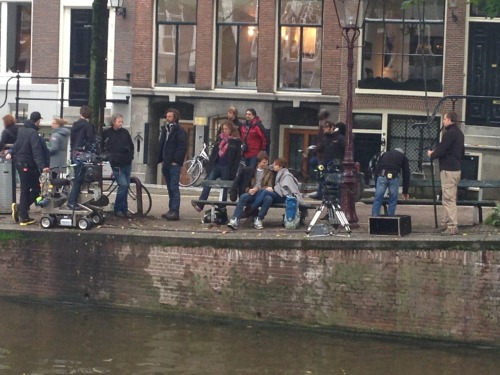
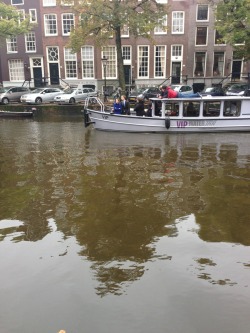
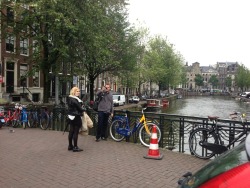
We don't know the source of these ones here (we do NOT own them) but they are paparazzi photos (via)


CLARIFICATION
Lest some of you meteorological whizzes get too worked up, I should explain that I actually saw the gibbous moon yesterday evening when I walked across the street to get Susie and me some after-dinner ice cream. The moon set too early this morning for me to see it at six-forty a.m. on my way out for my walk. The last line of my post was a bit of poetic license.
THANK YOU AND A PROMISE TO CHRIS
Thank you all for the lovely comments about my blogging. You cannot know how much they mean to this old philosopher.
Chris, I have begun the Kilman book on the TSSI, and when I manage to plow through it, I will write a post about what I have learned. But you must be patient. This old brain does not function with its former speed, which even when I was young could hardly have been described as lightning quick.
Chris, I have begun the Kilman book on the TSSI, and when I manage to plow through it, I will write a post about what I have learned. But you must be patient. This old brain does not function with its former speed, which even when I was young could hardly have been described as lightning quick.
GIB-BOUS ADJ. [OF THE MOON] - HAVING THE OBSERVABLE ILLUMINATED PART GREATER THAN A SEMICIRCLE AND LESS THAN A CIRCLE
On 15 April 1912, the RMS Titanic hit an iceberg and sank. Among the passengers was Harry Elkins Widener, a young Harvard graduate on his way home from Europe. To honor his memory, his mother gave 3.5 million dollars to his alma mater to build the Harry Elkins Widener Library. Widener sits on the southern edge of Harvard Yard, its rear backing on Massachusetts Avenue and its majestic flight of marble stairs looking across the central quadrangle of Harvard Yard to Memorial Church, where, on 9 June 1962, Cynthia Griffin and I were married.
When I arrived at Harvard in September 1950 as a sixteen year old Freshman, Widener was the center of the Harvard world. Entering the front doors, one climbed broad stairs to a landing halfway to the second floor, where there was a room that memorialized Mrs. Widener's son. If you entered the room instead turning and continuing on, a lady rose from her chair and began, in a singsong voice, "Harry loved his books..." On the second floor, running the entire north side of the library, was the enormous Reading Room. To the right was a much smaller room housing the entire card catalogue of the library -- bank on bank of narrow oblong drawers filled with little cards. You could slide out a wooden support, flip through the cards in a tray until you found your book, write down the number on a call slip with one of the stubby pencils provided, and then present the slip at the big arced desk to one of the librarians. Much more satisfying was to show your Harvard ID card and be admitted through a narrow door to the stacks themselves. There could be found every book ever published, or so it seemed to a young man fresh from Forest Hills High School. It was in that card catalogue room, on November 22 1963, that I was looking through a tray when I noticed several people gathered at the librarian's desk whispering agitatedly. When I drew near to find out what was up, I learned that the President had been shot in Dallas.
Widener was imposing, forbidding, massive and not completely welcoming to undergraduates. In 1949, the year before I first entered Harvard Yard, a brand new library had been opened in the Southeast corner of the Yard catering to undergraduates. Lamont Library was low and modern with large glass windows and blond wood that reminded me of my parents' dining room set. One of its most attractive innovations was a room in which one could listen to records checked out from the library's huge collection. [Younger readers of this blog will simply have to accept it on faith that there was a time, within the personal memory of some who are still alive, when one did not have all literature, film, art, and music on one's pocket phone.]
One of my favorites was a recording of a new play by Christopher Fry, The Lady's Not For Burning, a romantic comedy in verse set in late medieval England. The central character is Thomas Mendip, played on the recording by a young John Gielgud. I recall only one line from the play. Early in the first act Thomas reports that when he entered the town, "the moon was gibbous and in a high state." I was in those days a hopelessly romantic young man, and that play spoke to me as no other with which I was familiar.
All of which is an extremely roundabout way of saying that when I stepped out of my condominium building this morning to take my daily four mile walk, I looked up and saw that the moon was gibbous and in a high state.
When I arrived at Harvard in September 1950 as a sixteen year old Freshman, Widener was the center of the Harvard world. Entering the front doors, one climbed broad stairs to a landing halfway to the second floor, where there was a room that memorialized Mrs. Widener's son. If you entered the room instead turning and continuing on, a lady rose from her chair and began, in a singsong voice, "Harry loved his books..." On the second floor, running the entire north side of the library, was the enormous Reading Room. To the right was a much smaller room housing the entire card catalogue of the library -- bank on bank of narrow oblong drawers filled with little cards. You could slide out a wooden support, flip through the cards in a tray until you found your book, write down the number on a call slip with one of the stubby pencils provided, and then present the slip at the big arced desk to one of the librarians. Much more satisfying was to show your Harvard ID card and be admitted through a narrow door to the stacks themselves. There could be found every book ever published, or so it seemed to a young man fresh from Forest Hills High School. It was in that card catalogue room, on November 22 1963, that I was looking through a tray when I noticed several people gathered at the librarian's desk whispering agitatedly. When I drew near to find out what was up, I learned that the President had been shot in Dallas.
Widener was imposing, forbidding, massive and not completely welcoming to undergraduates. In 1949, the year before I first entered Harvard Yard, a brand new library had been opened in the Southeast corner of the Yard catering to undergraduates. Lamont Library was low and modern with large glass windows and blond wood that reminded me of my parents' dining room set. One of its most attractive innovations was a room in which one could listen to records checked out from the library's huge collection. [Younger readers of this blog will simply have to accept it on faith that there was a time, within the personal memory of some who are still alive, when one did not have all literature, film, art, and music on one's pocket phone.]
One of my favorites was a recording of a new play by Christopher Fry, The Lady's Not For Burning, a romantic comedy in verse set in late medieval England. The central character is Thomas Mendip, played on the recording by a young John Gielgud. I recall only one line from the play. Early in the first act Thomas reports that when he entered the town, "the moon was gibbous and in a high state." I was in those days a hopelessly romantic young man, and that play spoke to me as no other with which I was familiar.
All of which is an extremely roundabout way of saying that when I stepped out of my condominium building this morning to take my daily four mile walk, I looked up and saw that the moon was gibbous and in a high state.
Monday, 14 October 2013
MY SALLY FIELD MOMENT
Thank you for the generous and supportive comments to my pathetic post about blogging. Wikipedia tells me that Sally Field's famous line in her Oscar acceptance speech was actually an allusion to one of her lines in Norma Rae, a fact that was lost on most commentators [and on me as well, even though I have seen Norma Rae.]
GERRYMANDERING
In 1812, Massachusetts Governor Elbridge Gerry and his compliant State Legislature redrew the lines of state senatorial districts in bizarre ad hoc ways to favor Gerry's Democratic-Republican Party. Thus was born the portmanteau word Gerrymander. [Portmanteau words, as Lewis Carroll explained, are words designed to carry several bits of linguistic clothing in a single piece of linguistic luggage. "frumious" is a portmanteau word, made from the fusion of "furious" and "fuming."] It has become commonplace in discussions of the present political contretemps to ascribe to gerrymandering the imperviousness of the Tea Party Republicans to widespread popular disapproval of their tactics, and there is no doubt a small element of truth in this bit of mainstream media wisdom. But it is worth pointing out that as a general explanation of what is going on, it is wrong.
The American political system is a winner-take-all system, as Professor Lani Guinier has pointed out in a well-known series of scholarly papers. Representatives are chosen from geographic districts [unlike the system in South Africa, for example], and a simple plurality of the votes cast gives the seat to a candidate. The result is that many of the votes cast are "wasted," in Guinier's evocative term. She means by this not the votes cast for other candidates [they may be frustrated, but they are not wasted], but rather all the votes cast for the winning candidate over and above those required to secure the election. If a candidate wins with 65% of the votes cast, as many U. S. Representatives of both parties regularly do, then almost a quarter of the votes that she receives are wasted, for she will win with or without them.
The centrally important fact about the distribution of voters inclined to vote for Democrats or for Republicans is that the voters are, to a truly remarkable extent, residentially segregated -- people tending to vote for Democrats [or Republicans] by and large move to places where there are many other people tending to vote for Democrats [or Republicans]. The reason for this is simple: voting tendencies are powerfully affected by income, by race, by religion, by ethnicity, and by level of educational attainment, among other things. Rich people tend to live with rich people, and rich people tend to vote for Republicans. Highly educated people tend to vote for Democrats, and highly educated people tend to live with highly educated people. There are Black neighborhoods, Latino neighborhoods, gay neighborhoods, Catholic neighborhoods, and so forth.
Unfortunately for the Democrats, their supporters are more highly residentially segregated than are the supporters of Republicans. Hence more votes for Democrats than for Republicans are wasted in elections. In the Senatorial and Presidential elections [but not in the election of members of the House] this anti-Democratic Party tendency is multiplied by the peculiar allocation of Senate seats and Electoral votes mandated by the U. S. Constitution.
It is in fact true that in the last two general elections, the Republicans have benefited somewhat from real gerrymandering -- from the drawing of geographically implausible district lines, following the 2010 census, to secure the election of Republicans. But that is not the principal source of their advantage in House elections.
What can supporters of the Democratic Party do? The answer is simple, but very unappealing: move to heavily Republican districts in sufficient numbers to overcome the Republican Party numerical advantage. Now, I am willing to give money to the Democrats. I am willing to walk door to door for the Democrats. But am I really willing to live my life in a hotbed of Evangelical Tea Party enthusiasts? There are limits to the sacrifices I will make for my ideals.
Subscribe to:
Posts (Atom)